Be yourself; Everyone else is already taken.
— Oscar Wilde.
This is the first post on my new blog. I’m just getting this new blog going, so stay tuned for more. Subscribe below to get notified when I post new updates.
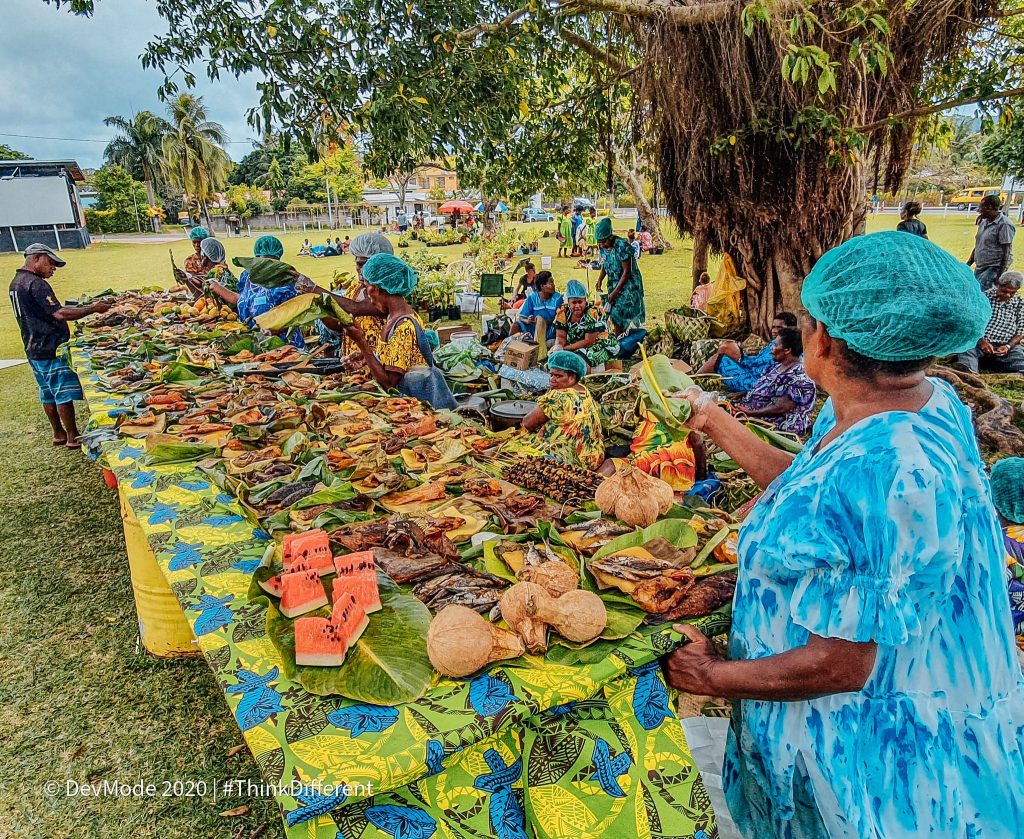
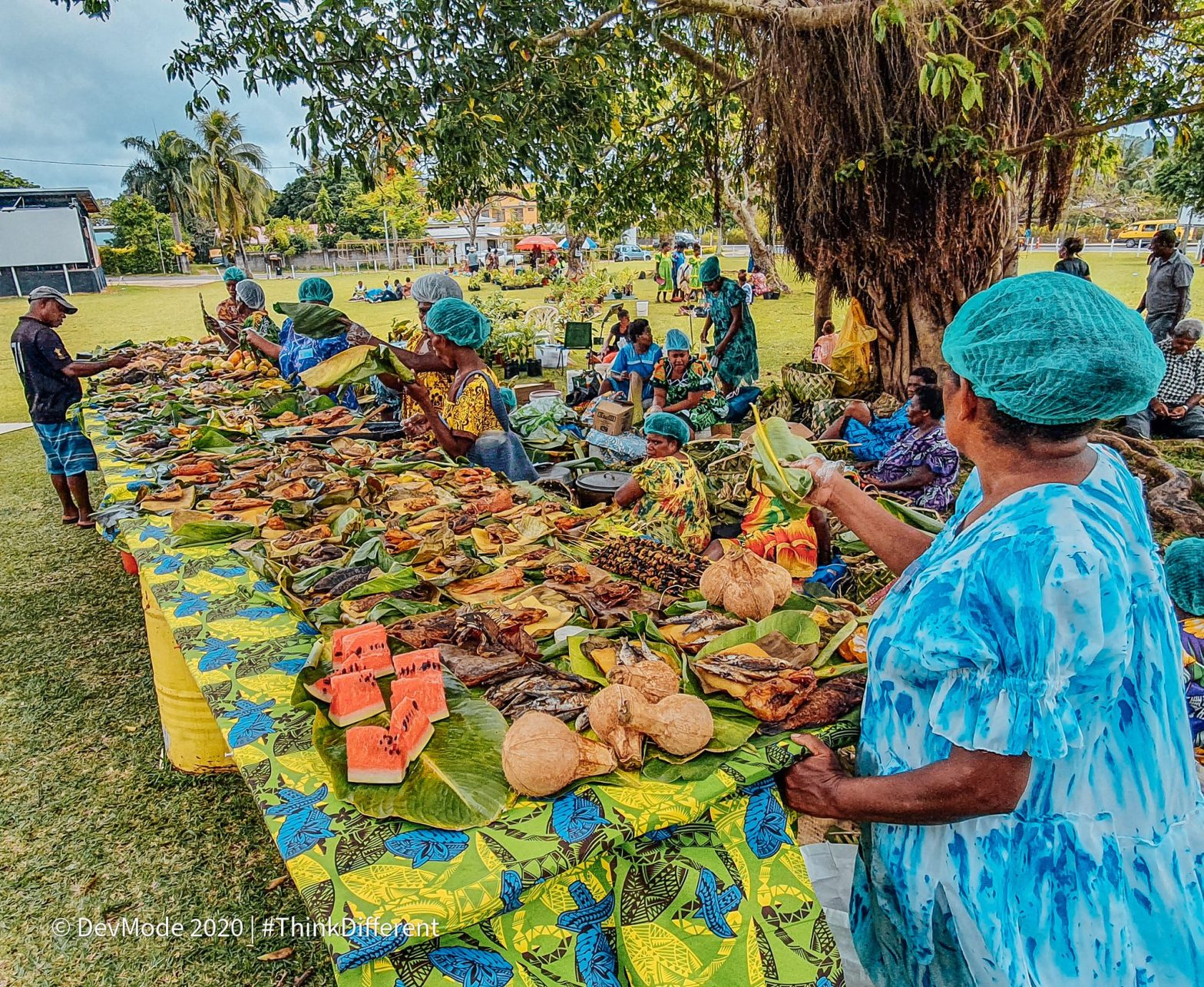
Our Food is Our Life, No Food No Life!
Be yourself; Everyone else is already taken.
— Oscar Wilde.
This is the first post on my new blog. I’m just getting this new blog going, so stay tuned for more. Subscribe below to get notified when I post new updates.
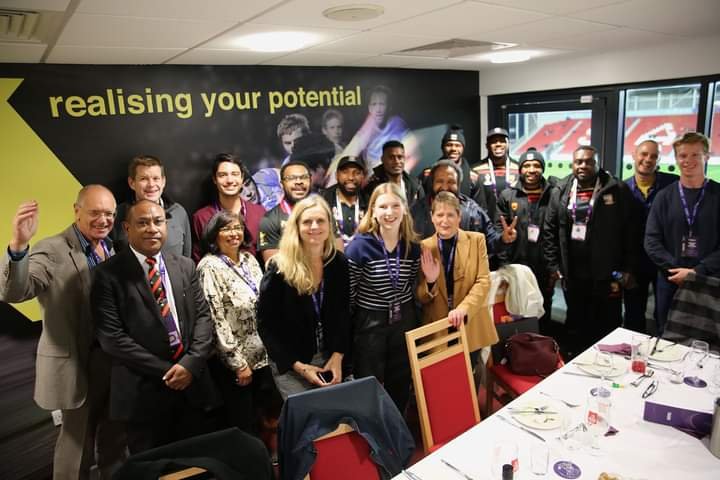
The Papua New Guinea Coffee Industry Corporation with the support of UK Aid (UKTP) and the UN’s International Trade Centre, successfully hosted a Coffee Cupping event with roasters from across the UK, taking advantage of the Kumuls’ participation in the Rugby League World Cup. The event was held in St Helens, UK to tie in with the side’s game against Tonga. The roasters, who were joined by the Minister for Sports, Honourable Don Poyle, tasted nine different coffees from PNG ranging from a couple of really excellent Y grades, a couple of Fair Trade Organic certified coffees, some fantastic estate type coffees and some superb A grades. Whilst some of the roasters were familiar with PNG coffees others were not, but all were impressed with the range of coffees tasted. Most indicated that they will re-evaluate their coffee menus to include either a greater use of PNG coffee or in the case of two roasters who had not used PNG coffee before to launch a single origin PNG coffee in time for Christmas.
The highlight of the event for all involved was meeting members of the Kumuls rugby team who wholeheartedly supported the initiative posing for selfies with the roasters and a group photo. This personal touch enhanced the connection between the roasters, Papua New Guinea and its coffee and made the cheering on of the team on the pitch even louder. The only downside being the disallowed try, which was hotly disputed by all present. It was a great event that has boosted the image of PNG coffee in the UK and the Corporation would like to sincerely thank UK Aid, ITC, the Minister and most of all the Papua New Guinea Kumuls for their excellent support. The exercise will be repeated next week to coincide with the game against the Cook Islands at which more than a dozen UK based roasters will be present.
The United Kingdom Trade Partnerships Programme (UKTP) is funded by the United Kingdom’s Foreign, Commonwealth & Development Office (FCDO) and implemented by the International Trade Centre (ITC). ITC is the joint agency of the United Nations and the WTO. It is the only multilateral agency fully dedicated to supporting the internationalization of SMEs. Its joint mandate combines a focus on expanding trade opportunities with the aim of fostering sustainable development.
Papua Red Fruit – News Desk, 8 July 2022
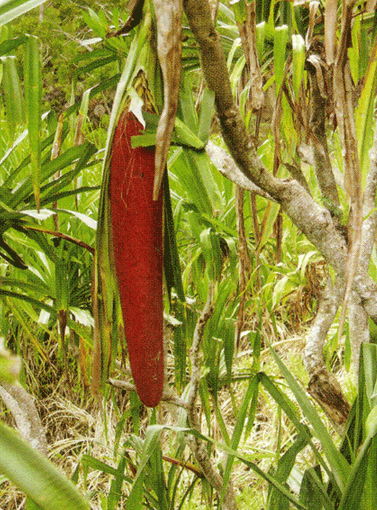
Jayapura, Jubi – Biology researcher and lecturer of the Cenderawasih University (Uncen) I Made Budi has studied Papua’s marita, or red fruit, for 19 years. After completing his postgraduate program majoring in nutrition at the Bogor Agricultural University (IPB), I Made Budi went to Papua and began researching red fruit (Pandanus conoideus) as animal feed.
I Made Budi said that from 2003 to 2022, research on red fruit has grown rapidly and demands for the fruit kept increasing.
“The red fruit is a plant in the Pandanus family from New Guinea. Its fruit is eaten in Papua New Guinea and Indonesia’s Papua Province. In the past, red fruit processing was still done by hand. Now we use special machines to get the red fruit extract,” I Made Budi told Jubi in his laboratory workspace in Waena, Jayapura City, on Tuesday, July 4, 2022.
Red fruit has many benefits, one of which is to increase the body’s immunity. “Red fruit is also popular among pregnant mothers,” said I Made Budi.
He explained that red fruit juice contains a lot of antioxidants, such as carotene (12,000 ppm), beta-carotene (700 ppm), and tocopherol (11,000 ppm). “It also contains immune boosters, such as oleic acid, linoleic acid, decanoic acid, Omega 3, and Omega 9, all of which are active compounds that neutralize free radicals in the body,” he said.
The red fruit can be further processed to be capsules for easier distribution. “Red fruit capsule-making machines are still imported but I am also currently designing one,” said the lecturer.
He further said that red fruit can also be processed into soap, shampoo, and food additives, as well as animal feed. “Red fruit can be made into animal feed, especially chicken feed so that it produces healthier eggs. Children who are allergic to eggs can safely eat eggs from chickens that are red-fruit fed,” he said.
As a researcher, I Made Budi really hopes that researchers, especially in Papua, can thrive and continue to grow. “I also ask the Papua Provincial Government to provide a forum for Papuan researchers to gather and develop together,” he said. (*)
*) This news is a contribution from a student of Cenderawasih University majoring in International Relations who is doing an internship at Jubi.
Golden Hybrid Yam – A new super climate resilient yam that can be harvested all year round and boost food security has been developed by Vanuatu Agriculture scientists reports ABC Radio Australia’s Pacific Beat:
“Yams have long been part of the traditional diet in Vanuatu, but they can be difficult to grow, with the wild yam taking up to three years to harvest and the commonly-found soft yam susceptible to pests and disease.
Agriculture Director Antoine Rove said the new Vanuatu Golden Hybrid Yam took more than a decade to develop.
“The characteristics of wild yam is that it grows in any conditions in dry land, islands, low levels close to the sea, volcanic areas as its more resilient…[and] we cross breed it the soft, soft yam,” he said.
Mr Ravo said the new breed can yield up to 6 kilograms per plant and can be grown throughout the year.
His office has received lots of requests since the Vanuatu Golden Hybrid was launched.
“We are now setting up collection plot that farmers can have access to in [the capital] Port Vila, we are planning to set it up in Santo and other four provinces. We’re also distributing two tonnes of yam to six provinces,” he said.
Anthropologist Kirk Huffman said it was significant that Tanna island was chosen as the site of the launch as the southern part of the island is well known for its yam festival, which is held in April.
“Yams are intricately and very strongly associated with the foundations and most basic elements of cultures in Vanuatu,” he said.
But he doesn’t doesn’t think the new Vanuatu Golden Hybrid will diminish the value of the traditional wild yam.
“In traditional yam planting on Tanna, the focus of the yam garden will still be the real traditional yams that have ritual significance,” he said.
LISTEN – 5 mins https://ab.co/3hG1ApC
By Alexander Rheeney, 13/08/2020
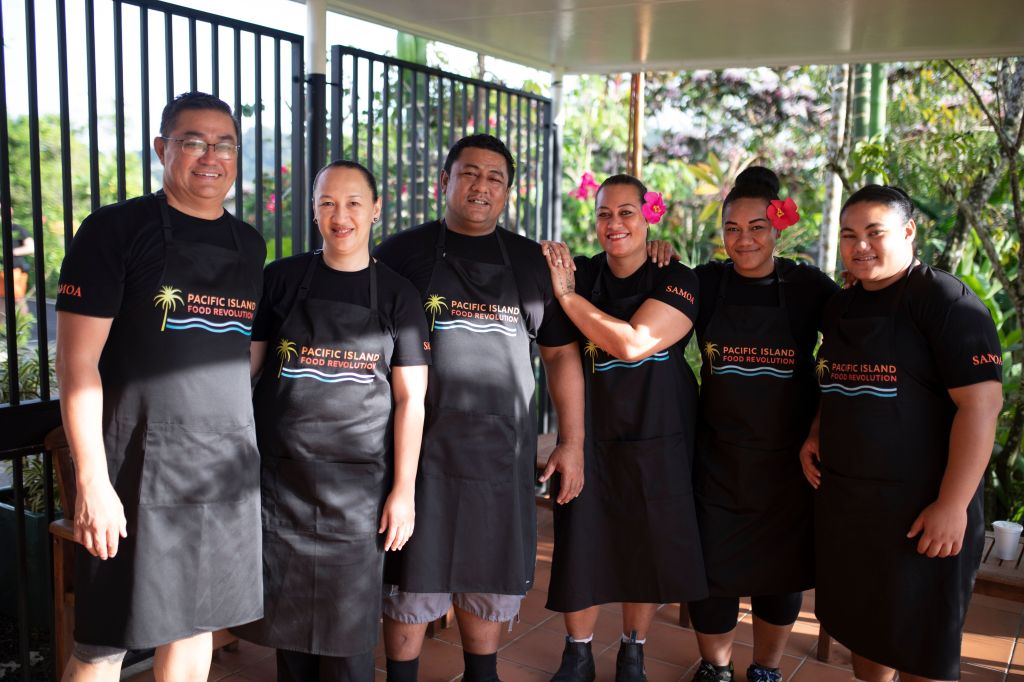
The popular cooking television show Pacific Island Food Revolution returns to air Thursday night in a new season.
The reality TV cooking show produced by international chef and award-winning author Robert Oliver features teams from Fiji, Samoa, Tonga and Vanuatu who compete to prepare local recipes which are judged by Oliver and his co-hosts.
According to a media statement released Thursday afternoon [Samoa Time] by the show’s producers, guests on the show include Tonga’s Princess Royal Salote Pilolevu Tuita; Samoan chef and restaurateur Dora Rossi; nutritionist Votausi Reur-McKenzie from Vanuatu; Tonga’s Fololeni Curr; Dr Jone Hawea of Fiji, and Tongan Olympian and UNICEF Ambassador Pita Taufatofua.
The TV show is a product of its namesake, Pacific Island Food Revolution [P.I.F.R.], which its producers say is a behavioural change program that aims to combat the high rate of non-communicable diseases [N.C.D.] in the Pacific region by promoting the consumption of local healthy food.
Using an evidence-based approach, P.I.F.R. has developed a culturally relevant, strengths-based program that uses a range of media including reality TV, radio, social media and strategic partnerships to encourage good food choices.
Through this, P.I.F.R. aims to disrupt the status quo and catalyse the role of local food in not only improving health and wellbeing, but also contributing to economic development, tourism, gender, agribusiness and climate change through good food choices.
P.I.F.R. TV show co-host and Ni-Vanuatu nutritionist Votausi MacKenzie-Reur said in the statement that she is proud that the project promotes both local food and Pacific culture.
“For so long, many of our people have associated foreign processed food to a high social rank and status, and said that our traditional food is meant to be consumed in the villages not in the city. This idea that fast food and sugary drinks are fashionable is unfortunate,” said MacKenzie-Reur.
“Pacific Island Food Revolution is changing that perception. We are glamourising our local nutrient-rich foods and its health benefits. Our advantage is that we have access to almost every living room in the Pacific whether it’s through our TV show, radio show or social media campaigns.”
Diabetes among adult Pacific Islanders is rife, with Fiji having the highest death rate from diabetes in the world, stated the media statement.
Obesity is another regional scourge and ironically, so too is malnutrition with more than a third of children under five in Melanesia stunted as a result of chronic undernutrition.
“The N.C.D. crisis in the Pacific is a very recent phenomenon,” said Mr Oliver.
He blamed the crisis on “the tsunami of processed foods, the big brands and marketers which invaded the lifestyle of the Pacific” in recent decades, replacing the traditional Pacific diets.
But with P.I.F.R., Mr Oliver is pioneering a health food fightback.
“The P.I.F.R. TV show will energise the Pacific in a way that it hasn’t been energised before,” he said.
“For the first time, we’ve designed a community revolution around our local healthy food and identity, encouraging people to return to their traditional nutrient-dense diet of superfoods.”
Mr Oliver added: “The uniqueness of P.I.F.R. is that we provide a Pacific solution to our health woes – that solution is literally in our backyard: our local healthy food.”
But change won’t be quick, according to Mr Oliver, who is of the view that it will take up to eight years.
“We’re working with our evaluation partners and experts in behavioural economics to monitor the impacts.”
Funded by the Governments of Australia and New Zealand, the P.I.F.R. TV show is broadcast across 24 Pacific TV networks in 14 Pacific countries reaching over five million viewers.
The P.I.F.R. local language radio show reaches wide audiences, that is 80 per cent of the population in Fiji and 100 per cent of the population in Vanuatu.
Additionally, the project’s social media campaigns have an engagement of over 2.5 million in the first half of this year – one of the largest in the region.
The P.I.F.R. TV show will be distributed to Australia, New Zealand, Asia, Europe and North America showcasing local food and Pacific culture to a global audience.
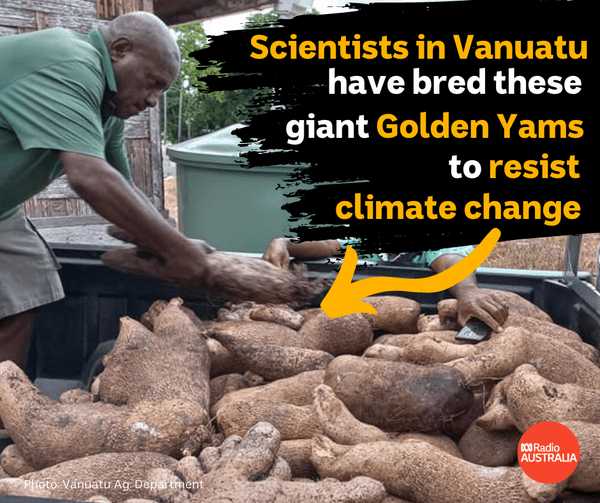
Agriculture scientists in Vanuatu have developed a new super climate resilient yam that can be harvested all year round and boost food security.
Yams have long been part of the traditional diet in Vanuatu, but they can be difficult to grow, with the wild yam taking up to three years to harvest and the commonly-found soft yam susceptible to pests and disease.
Agriculture Director Antoine Rove said the new Vanuatu Golden Hybrid Yam took more than a decade to develop.
“The characteristics of wild yam is that it grows in any conditions in dry land, islands, low levels close to the sea, volcanic areas as its more resilient…[and] we cross breed it the soft, soft yam,” he said.
Mr Ravo said the new breed can yield up to 6 kilograms per plant and can be grown throughout the year.
His office has received lots of requests since the Vanuatu Golden Hybrid was launched.
“We are now setting up collection plot that farmers can have access to in [the capital] Port Vila, we are planning to set it up in Santo and other four provinces. We’re also distributing two tonnes of yam to six provinces,” he said.
Anthropologist Kirk Huffman said it was significant that Tanna island was chosen as the site of the launch as the southern part of the island is well known for its yam festival, which is held in April.
“Yams are intricately and very strongly associated with the foundations and most basic elements of cultures in Vanuatu,” he said.
But he doesn’t doesn’t think the new Vanuatu Golden Hybrid will diminish the value of the traditional wild yam.
“In traditional yam planting on Tanna, the focus of the yam garden will still be the real traditional yams that have ritual significance,” he said.
This is an example post, originally published as part of Blogging University. Enroll in one of our ten programs, and start your blog right.
You’re going to publish a post today. Don’t worry about how your blog looks. Don’t worry if you haven’t given it a name yet, or you’re feeling overwhelmed. Just click the “New Post” button, and tell us why you’re here.
Why do this?
The post can be short or long, a personal intro to your life or a bloggy mission statement, a manifesto for the future or a simple outline of your the types of things you hope to publish.
To help you get started, here are a few questions:
You’re not locked into any of this; one of the wonderful things about blogs is how they constantly evolve as we learn, grow, and interact with one another — but it’s good to know where and why you started, and articulating your goals may just give you a few other post ideas.
Can’t think how to get started? Just write the first thing that pops into your head. Anne Lamott, author of a book on writing we love, says that you need to give yourself permission to write a “crappy first draft”. Anne makes a great point — just start writing, and worry about editing it later.
When you’re ready to publish, give your post three to five tags that describe your blog’s focus — writing, photography, fiction, parenting, food, cars, movies, sports, whatever. These tags will help others who care about your topics find you in the Reader. Make sure one of the tags is “zerotohero,” so other new bloggers can find you, too.
 Melanesia Foods Blog